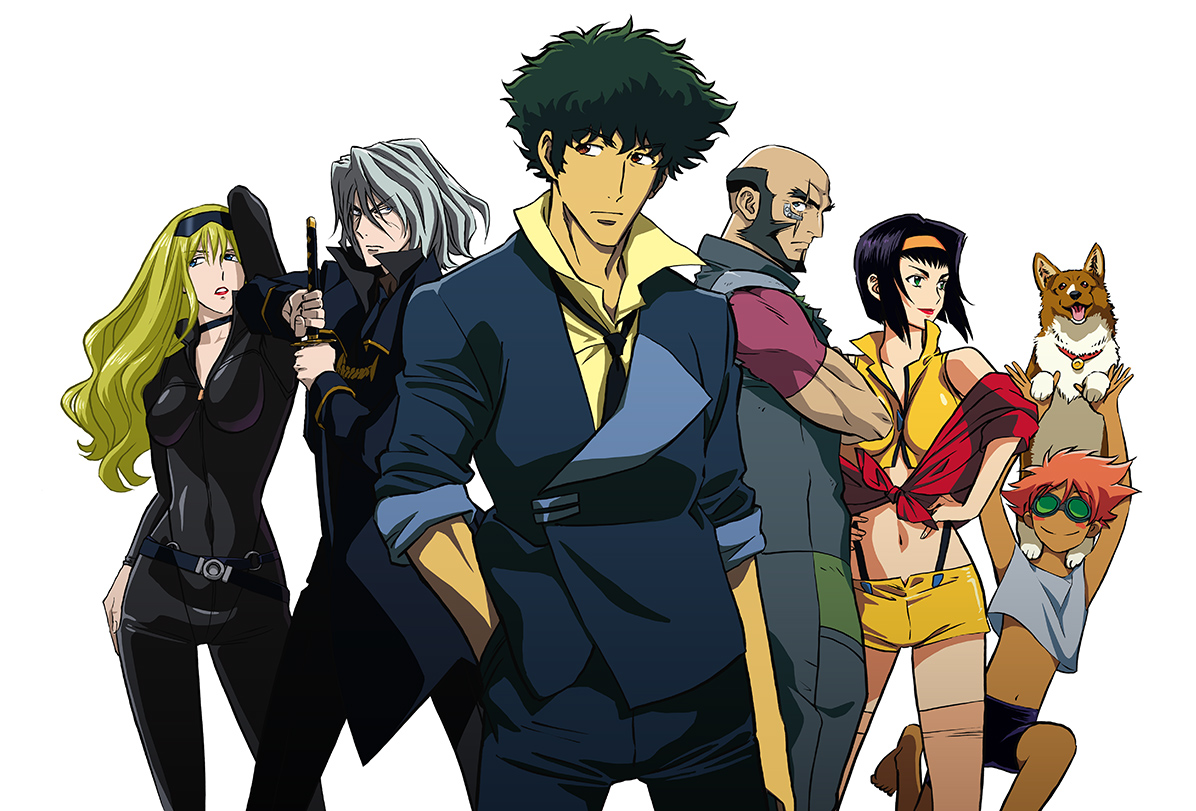

The anime Cowboy Bebop, whose soundtrack was selected as the Animation Album of the Year at the Japan Gold Disc Awards, received an overwhelming response both in Japan and abroad.
The soundtrack, composed by the undeniably brilliant Yoko Kanno, is packed with an eclectic mix of genres—blues, jazz, techno, and more. Back in 1998, its freshness and originality were truly exceptional. While genre-defying music production is more common in today’s Japanese pop scene, the groundbreaking idea that “it’s okay to mix this kind of music with that kind” left a deep impact—not only on anime soundtracks but on music as a whole.
In particular, before Cowboy Bebop, there were very few anime in which stylish and cool music was used in the soundtrack—Lupin the Third being one of the few notable exceptions. But after Cowboy Bebop, such soundtracks became much more common. Examples include Baccano!, Black Lagoon, Space Dandy, and many others—it’s hard to even list them all.
Some might argue that Lupin was the true originator, and while it’s true that the first Lupin the Third anime aired in 1971, the fact that there weren’t many similar standout works between then and 1998 suggests otherwise. Given the explosion of similarly styled works after Cowboy Bebop, I interpret it as marking a major turning point—a revolution—in the world of anime soundtracks.
It's totally fine to make anime soundtracks for adults
Back in the 1970s, anime was still widely seen as something only for children. In the 1980s, with the emergence of the term otaku, more works aimed at adult audiences began to appear. Still, even well into the 1990s, strong prejudices against anime persisted (speaking from personal experience). It wasn’t until the 2000s that anime started to be recognized as “something adults can enjoy too,” and one key reason for that shift was Cowboy Bebop’s immense popularity overseas.
What sparked that popularity was its undeniably cool soundtrack. I still vividly remember a time back then when a friend who didn’t even like anime recommended Cowboy Bebop to me, saying, “The music is just insanely cool.” It was a rare case where one could almost justify getting into anime because of the music. The soundtrack, with its bluesy and sophisticated adult vibe, helped break down prejudice—maybe not entirely, but at the very least, it helped elevate anime’s standing in the cultural mainstream.
The anime itself was also tightly linked to its music. While soundtracks are usually composed to accompany the visuals, Cowboy Bebop gave the impression that the show was built around the music. And indeed, following Bebop, we saw the emergence of many anime where music played a central and irreplaceable role. It wouldn’t be an overstatement to say that Cowboy Bebop raised the status of anime soundtracks to something on par with those of live-action films.
Even if it wasn’t the very first pioneer—
As mentioned earlier, there were already anime before Cowboy Bebop that featured mature themes and sophisticated music. However, among the few that continue to be beloved to this day, it’s rare to find a series as short yet as impactful as Cowboy Bebop. There’s no doubt that its incredibly cool soundtracks—including both the iconic opening theme and the background score—played a major role in making that possible. It served as a powerful catalyst and a bridge that helped break down prejudices against anime.
Even now, in the Reiwa era, the Cowboy Bebop soundtrack still sounds fresh. If you have the chance, I highly recommend giving it another listen.