

In Part 1, I said that Hisaishi's music speaks to the primal scenery of the heart, but why is his music able to draw out memories tucked away so deep within? In the end, I think it comes down purely to the strength of its persuasiveness.
In other words, Hisaishi's music is overwhelmingly persuasive—but why? A lot of recently popular songs suddenly change rhythm or modulate like a roller coaster; that's fine in its own way, and they're crafted to be musically smooth using passing chords and substitute chords, but a patchwork feeling does still tend to show through. I think Hisaishi's music is so persuasive precisely because it has none of that forced quality. And yet he's by no means just picking safe notes. His extraordinary melodies have the power to seize the heart and never let go.
Princess Mononoke, Spirited Away, Howl, Ponyo…
Princess Mononoke is the work that made the already highly regarded Miyazaki, quite literally, the world's “Hayao Miyazaki,” and Hisaishi's music spread across the globe all at once. Listening to the soundtrack, “The Legend of Ashitaka” really leaves a deep impression. The instruments are Western, yet the melody feels somehow Japanese—a magnificent piece that stretches endlessly outward and evokes a nature that, for humans, is perilous. The scene where it's used in the film isn't even a tearful one, and yet it brings tears to my eyes.
The next film, Spirited Away, ranks first in box-office revenue among all Ghibli works, and among people around me, many name Spirited Away as their favorite Ghibli film. In the opening piano of the piece “The Name of Life,” the chords beneath the melody are subtly, slightly discordant—as if expressing, with piano alone, Chihiro's feeling that she can't quite remember something important. As the piece progresses, the chords shift and settle into notes that fit perfectly. Every single note has meaning, and the visuals and music are equals that build on each other—overwhelmingly persuasive. It's true of every piece, but it's truly divine work.
From Howl's Moving Castle—a masterpiece that feels like a return to the worldview of his earlier days—there's “Merry-Go-Round of Life,” in 3/4 time like a waltz, with a grown-up refinement and a graceful air. It's a very mysterious piece in which contradictory emotions well up in the chest: grand, ballroom-like joy alongside a slightly lonely melancholy. It's as if it distills into a single piece the importance—and the difficulty—of living life without losing brightness, conviction, or dignity even amid tragedy.
Ponyo's “Ponyo on the Cliff by the Sea” is a very interesting piece too. The bottomlessly bright, fun, childlike main melody and the anxiety-inducing melody that comes in from the middle of the piece—here, too, the hesitation of a child who still has no compass, who doesn't know what to do—is splendidly expressed with xylophone and pizzicato.
The Wind Rises, The Boy and the Heron
Among Ghibli works, The Wind Rises won great popularity with one of the studio's most wistful stories. For this film, “The Journey (A Dream of Flight)” is surely the famous one. The mandolin and balalaika evoke rural scenery, while the lovely tones of flute, oboe, and clarinet evoke a blue sky. The melody that suggests turbulent times, and the piano in the middle section that conveys a quiet resolve, are essential listening too. In the sense of a single piece holding the entire scenery of the film inside it, it might be the most immersive of all time.
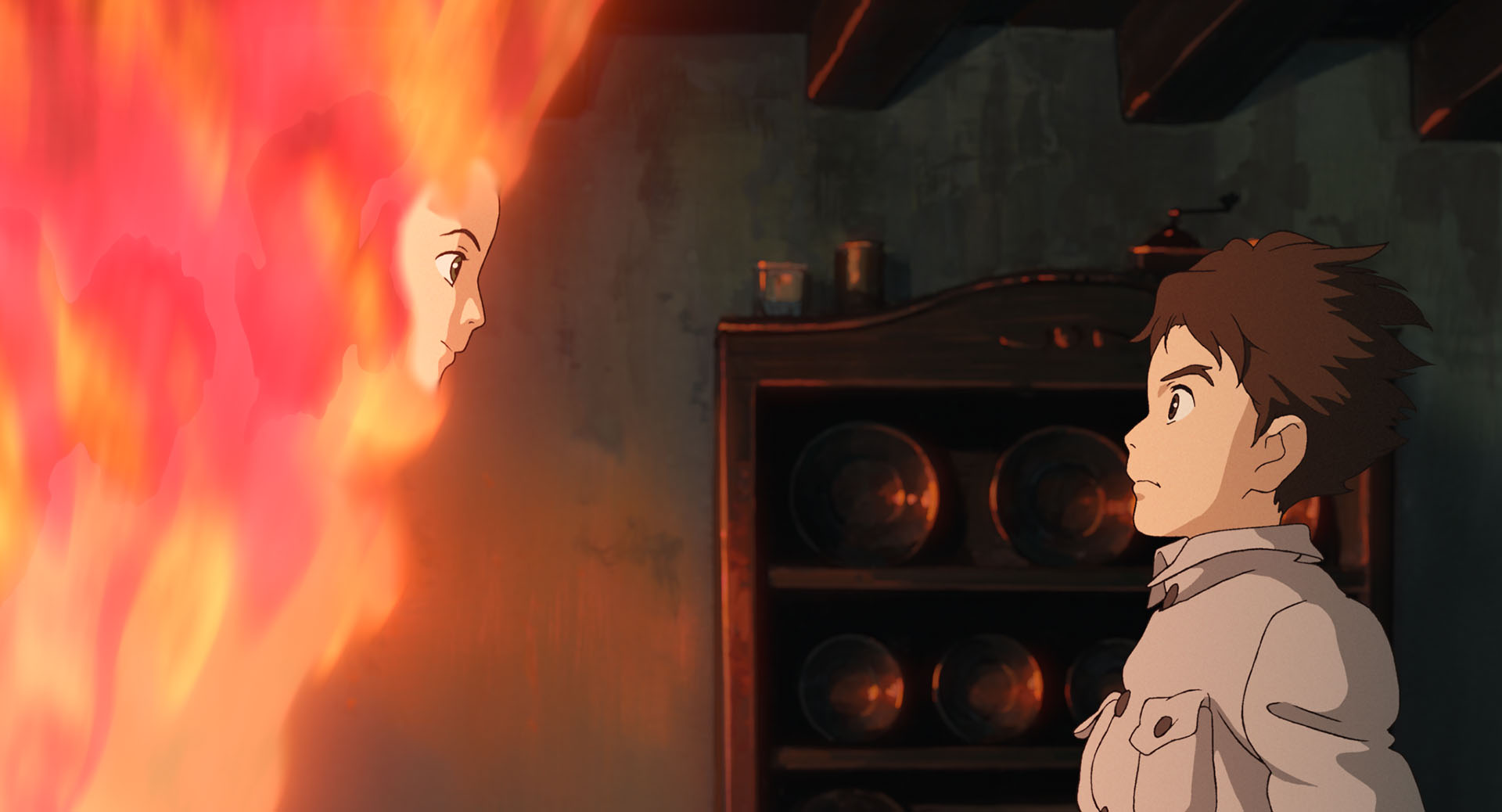
The music for The Boy and the Heron—whose release is still fresh in memory—is of course handled by Hisaishi as well. But since I haven't watched The Boy and the Heron yet, I've only been able to hear it as music. A score truly is meant to be experienced together with the visuals. That said, it's a calm, wistful yet powerful piano piece, and just one chorus made me really want to see the film. Even hearing the music first, you can imagine “what scene is this melody used in?”—and the emotion when you actually watch it as an animated film is all the greater for it. He's someone I hope will keep leading Japan's music world for a long time to come.
From Studio Ghibli Inc.