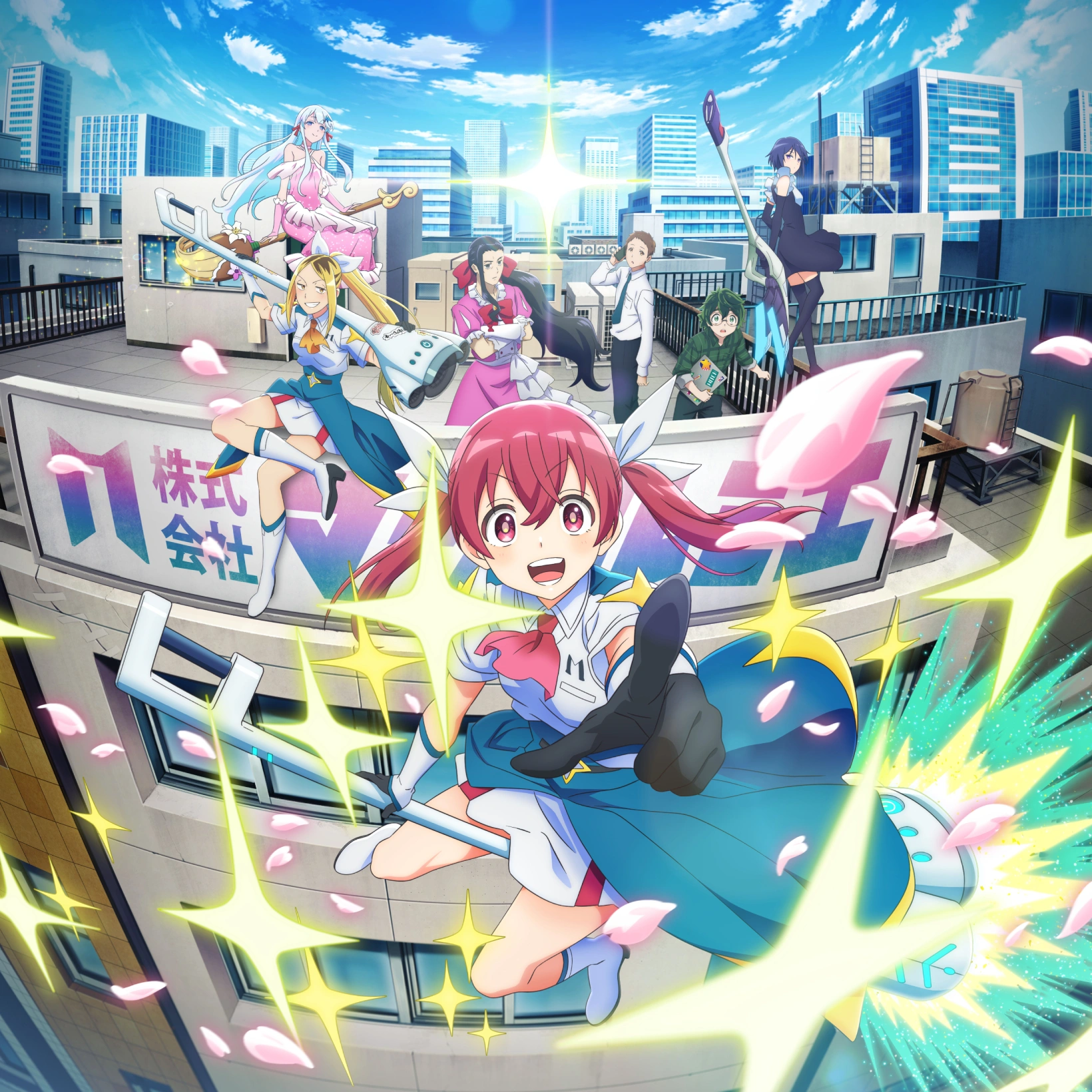

When you think of magical girl shows, what works come to mind? Going way back, there were kids' titles like Sally the Witch and Akko-chan's Secret, the so-called Toei Witch Girl series; then the standard-bearers of the Pierrot magical girl series from the '80s (think Magical Angel Creamy Mami); then into the '90s, Sailor Moon and Magic Knight Rayearth, which added all sorts of new ingredients and became catalysts for the genre's evolution, plus Cardcaptor Sakura and Ojamajo Doremi; then the dominant force from the 2000s onward, the Pretty Cure series; and Madoka Magica, which threw a stone into the magical girl pond. The vast genre of the magical girl has evolved with the years, and to this day new magical girls keep being born from all kinds of angles. A genre that was once strictly for kids has, along with that evolution and with history (people who got hooked on the genre as children, and so on), gained more and more adult fans, to the point where a meme has sprung up in certain circles: the "big friends." Magilumiere Co. Ltd. is not a standard magical girl work. But neither is it a clearly unorthodox work in the vein of Madoka. Magilumiere is a magical girl work aimed at working adults. The "big friends" meme I mentioned refers to grown-ups who watch shows made for little girls with full devotion, but this isn't that; I think it's a work that clearly targets working adults. The anime's first episode opens with an extremely realistic scene of protagonist Kana Sakuragi struggling with her job hunt, and "magical girls" are depicted as a business operated by companies large and small. In that sense it might seem like an unorthodox approach, but Magilumiere portrays things in a fairly standard way as a business manga, so I think this anime is, after all, a standard one.
The Score, Too, Is Standard for This World!
The first episode opens straight into a battle scene between a monster and a magical girl. As the heroine is being chased by a monster that looks like an Ohmu, the music kicks off with a tense, modern-sounding intro that shifts into a fast, driving electronic rock sound. As far as scores with this kind of sonic palette go, it has an atmosphere close to Ghost in the Shell or A Certain Scientific Railgun. For a magical girl score, the hard sound really sticks in your ears.
The BGM that plays during the job-hunting scenes feels less like an anime score and more like the score for a live-action drama, and the music during the emergency dispatch and transformation bank sequences also notably isn't the kind of sound usually used in magical girl shows. That said, it's not unorthodox; it's a score that's planted squarely on the royal road for this particular work's world. The composer is Makoto Miyazaki, who also appeared at the 2023 Kyo-ban Festival. Makes sense: in a world where magical girls are recognized a bit differently than in past works, as a "cool, socially respected, popular profession," a standard magical-girl-style score would clash with the setting. Miyazaki is at his best with rock-flavored sounds, whether programmed or played by a band. In fact, he has a famous anecdote: when he first composed a score, he didn't understand orchestral writing and ended up composing nearly in tears while reading a book about it. In that sense too, I thought he's an incredibly perfect fit for the color of this work.
Only the first episode has aired so far, so we've only heard a sliver of the score, but I'm really looking forward to what kind of music plays from here on out!
Not So Much a Magical Girl Show, But Rather…
As you can tell even from the work's title, the "company" is the main subject here. It's grounded in reality through and through. In a work where even the things called "magic" are software that system engineers program from scratch, I felt that the score really nails the standard, and I mean that: this is exactly it! The combination of the royal road as a business story and the battle scenes as a magical girl story. Magilumiere Co. Ltd. might just be a new kind of standard work.