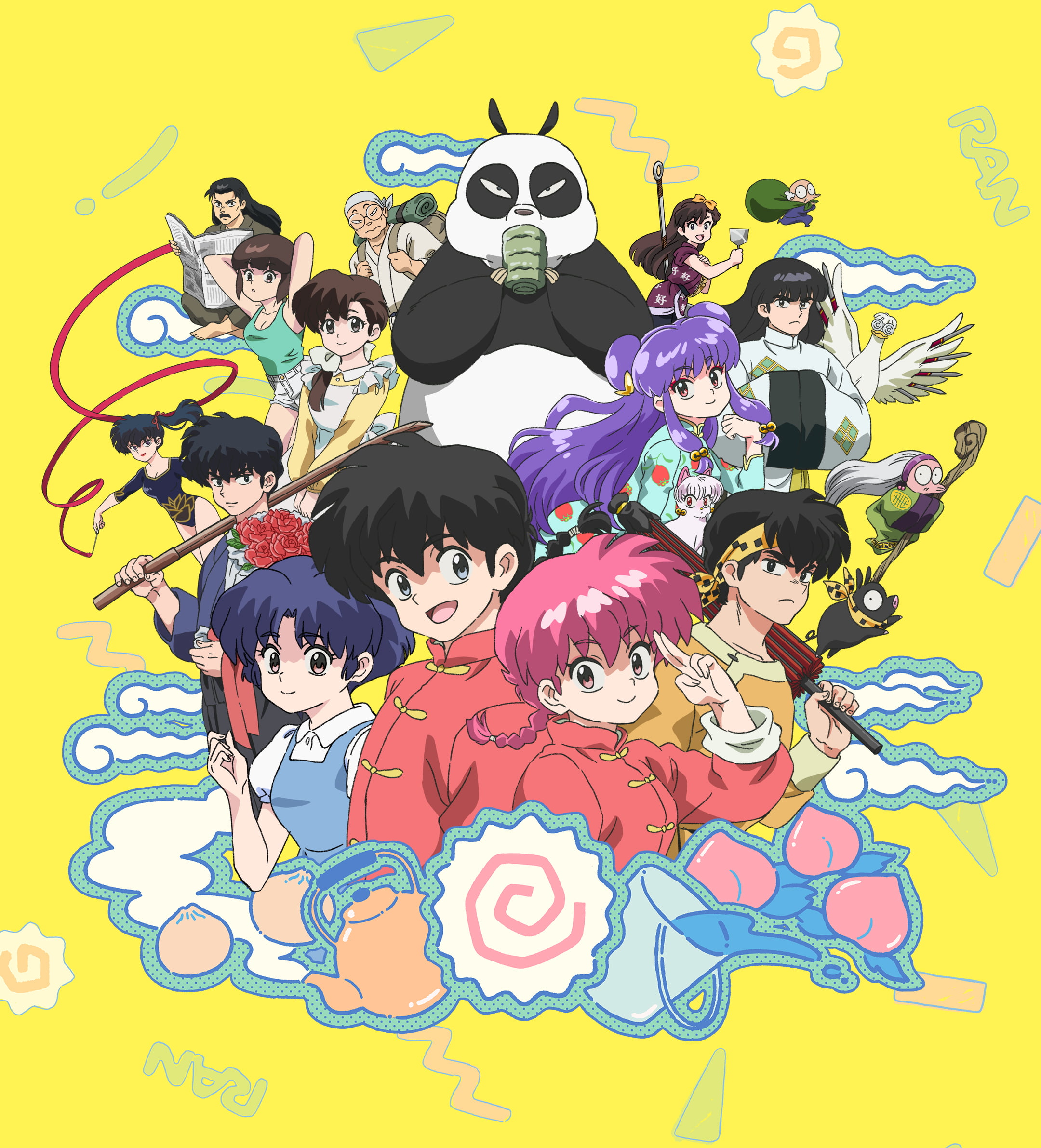

How many readers had their tastes warped by this work back in the day? You could easily have readers spanning three generations of a single family. This is Ranma ½, a masterpiece from the late Showa to early Heisei era by the monster of a manga artist that is Rumiko Takahashi. As an aside, I'm a Ranma-generation reader through and through. Roughly the Ice Age generation falls into the Ranma generation. Incidentally, the Shinjinrui generation and the Bubble generation are the Urusei Yatsura and Maison Ikkoku generations, and within the Bubble generation, Inuyasha; while Rin-ne falls to the Yutori and Gen Z generations. In this way, Rumiko Takahashi's works can be used as substitutes for generational names.
Rumiko Takahashi, who even appears in manga-about-manga works like Kazuhiko Shimamoto's masterpiece Blue Blazes (Aoi Honoo) and Fujihiko Hosono's Manga Mushi (1978). She's truly one of Japan's representative manga artists, and surely no one would object to that.
I love all her works, but as you'd expect from being of that generation, Ranma is special. Even when I heard "a remake is being made!" I couldn't celebrate without reservation, which is the sad and troublesome part of being an otaku.
The anime was surely quite well made for its time, and the voice actors fit perfectly. How will all that change in a remake?! It's the fan's psychology to feel both excitement and anxiety.
Once the lid came off, I heard the main characters' voice actors were mostly returning, and lots of people were thrilled. Of course, I was one of them. But once it was decided, I'd start thinking things like, "Can these folks, who've now become serious veterans, really pull off that fresh, lively performance from back then… maybe it would've been better to leave it to new voice actors…" In short, I was a genuinely troublesome fan. And then what happened? The voices were exactly the same as back then! And the quality was further polished to perfection! Why, female Ranma's voice (CV: Megumi Hayashibara) feels even younger than back in the day. Legendary voice actors really are amazing. They cleanly blew away my petty worries. And I just feel like saying thank you for giving us a wonderful Ranma in the Reiwa era.
I've scribbled out my heartfelt feelings, but precisely because I'm such a troublesome fan, I was of course very curious how this score would turn out. With this, though, I honestly wasn't worried even before listening. That's because the composer is none other than Kaoru Wada. He's been active as a score composer since the 1980s, and hearing that he handled the score for Inuyasha, wonderful music is practically guaranteed.
Incidentally, for the score of the old Ranma anime, please refer to this article.
Anyone who's actually watched the new anime will surely understand. That "yes, this! This is the good stuff" kind of score. For people of the Ranma generation, it's the most familiar, easy-to-grasp kind of score.
It draws a clear line away from the recent anime trend of orchestra-like arrangements using tons of sound; instead, it's the kind of by-the-book, cliché score common from the '80s to the '90s. For a battle scene, it's a valiant atmosphere using weighty sounds; for a gag scene, clattering sounds with a goofy melody—it's a score that somehow puts you at ease.
Of course, brand-new score may appear as the story continues from here, but for now, within the first five episodes, the score is so "Ranma" and so early-Heisei that you'd wonder if it was even used in the old anime. It's full of pieces perfect for the madcap, high-energy Ranma, and fun to listen to. With plenty of presence in the best sense, and even its prominence somehow endearing, the Reiwa-era new Ranma ½ score is, without wavering, a loving score brimming with that Heisei feel, and it's a piece of work that you could say firmly supports the world of Ranma!
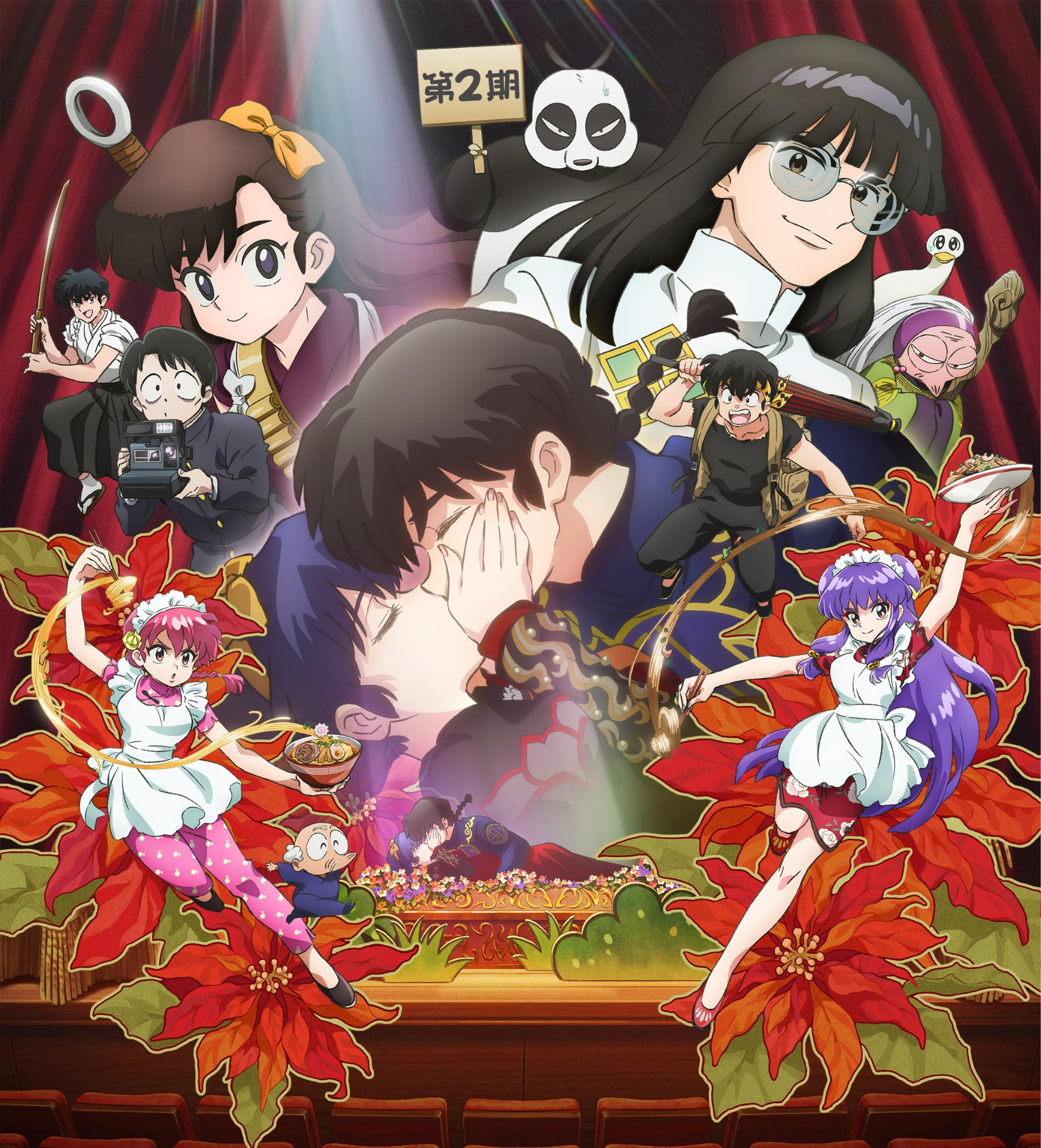
Quoted from the official site https://ranma-pr.com/