
I bet plenty of people had a "yes, this, THIS!" moment from the very score that opens episode one. As for me, I'm of course part of the Wataru generation, so the ominous toll of a bell and lightning roaring through the darkness... precisely because it's so blatantly cliché, it's the kind of staging I hadn't seen in ages, and I was hyped within seconds.
When you think of Wataru, what surely comes to mind is the original Mashin Hero Wataru. SD Gundam was all the rage, and the fact that originally cool robots took on somehow adorable forms shrunk from two-head-tall to about three-head-tall proportions won over the kids of the era; Macross and Patlabor got the SD treatment too, and right as original SD-sized mecha were starting to rise to prominence, the Ryujinmaru made its grand entrance, and oh, how cool it was. That same style of mecha got carried on afterward into the likes of Granzort and Ryu Knight. And then there was the ridiculously stacked voice cast: Mayumi Tanaka as Wataru, a then up-and-coming Megumi Hayashibara as Himiko, Tomomichi Nishimura as Master Shibaraku... I could go on forever, but it was a wonderful anime. That's precisely why a remake was made in 2020, and why reboot works like this Majin Souzouden Wataru keep getting made.
The protagonist Wataru in this new work feels like a modern kid, a "RyuuTuber" (something like a YouTuber), and apparently he can pull out block-like objects to use as footholds, build robots, and so on. This kind of "I don't really get it, but he can do it" staging is exactly the stuff of kids' anime. As an adult you'll be tempted to nitpick, but the new Wataru carries that same "who cares, if it's fun then it's all good!" energy.
The Score Composer for This Series Is the Intriguing Wataru Maeguchi
So is the idea that, since the names match, let's leave Wataru's score to Mr. Wataru? Well, no, of course not. Wataru Maeguchi is, to begin with, a producer who has provided songs to many artists and voice actors and handled anime scores. The score for this series, while strongly fantasy-flavored in a way that somehow recalls old Square works overall, struck me as full of tracks with strong, memorable melodies. If you asked me what exactly is so Square-like about it, it'd be hard to put into words; maybe I just feel that way on my own because the era when the original Wataru aired on TV was precisely the heyday of the Famicom and Super Famicom. There are tracks where timbres that suit a medieval-feeling world blend seamlessly and without any sense of dissonance with sounds reminiscent of traditional Japanese instruments of old, score pieces with memorable, retro-feeling melodies (in a good way) like those that played in elementary-schooler anime from the '80s into the '90s, plus somehow comical tracks that mix in melodies deliberately nudged slightly off the notes that fit within the chord, and so on. The eyecatch music is also somehow nostalgic and left a very good impression. Since the timbres used have a modern feel to them, the result is something that feels new within its nostalgia.
The anime itself is well made too, with clean, modern, easy-to-watch art that today's kids can enjoy on first viewing without any sense of dissonance, while adults of the original Wataru generation get the Ryujinmaru with the very same name, plus the very same controls and boarding method as back then, making it a work you can fully immerse yourself in. I thought it was a fine piece of work where adults and kids alike, regardless of age, can look forward to what comes next in Wataru's nostalgic yet new adventure, hearts racing!
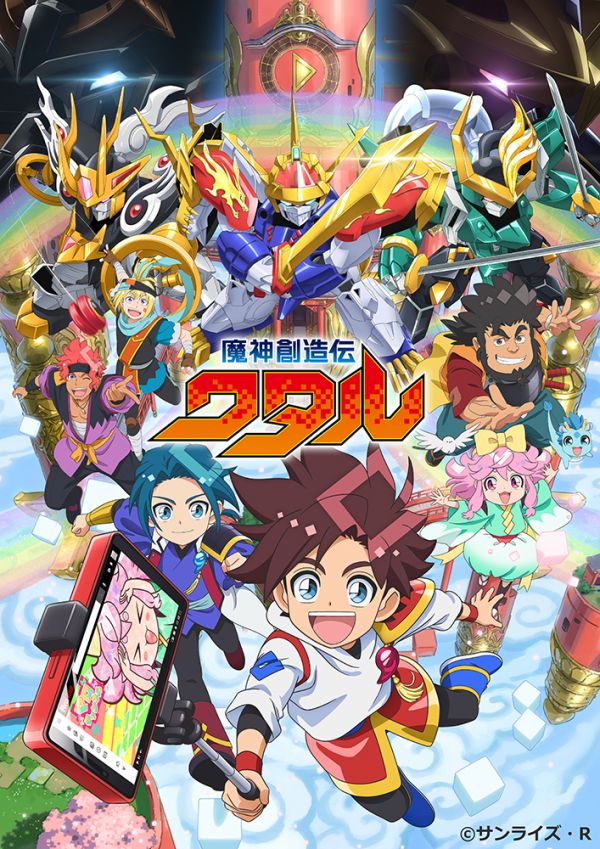
Quoted from the official site https://www.wataru-anime.net/index.html