
One Piece has entered its final saga, and Jujutsu Kaisen, My Hero Academia, Undead Unluck, Mashle, Dr.STONE and more... lately, marquee-class serializations have been wrapping up one after another, and there's chatter — especially on social media — that Weekly Shonen Jump might be in trouble. But the great thing about Jump is its lively metabolism. It's precisely because Jump has swapped out its blood so relentlessly that it has stayed king of the manga magazines. And when you ask what Jump's current flagship is, one name that comes up remarkably fast is SAKAMOTO DAYS.
Early on, it felt like a series whose appeal lay in the occasional, knife's-edge action scenes punctuating a mostly everyday-life story. But in classic Jump-manga fashion, the proportion of cool action scenes gradually grew, and it earned its place among the heavy hitters — that's the impression it gives.
Twenty volumes have already been published, and I'd guess the editorial team agonized quite a bit over when to greenlight an anime. (I'm speaking purely from my Bakuman knowledge here.) I suspect many fans were thinking, "When is this getting an anime? I can't wait."
Once you actually watch the anime, the first thing you notice is that the protagonist, Taro Sakamoto, is voiced by Tomokazu Sugita. Then there's a younger male partner, and on top of that, a Chinese girl. Those three are the main characters... I can't be the only one who was somehow reminded of Gintama. That said, once you start watching, you realize SAKAMOTO DAYS isn't really like Gintama, which swings wildly between gag scenes and serious scenes; instead, its core contrast is between fairly heartwarming everyday life and the tense world of assassins.
The soundtrack's contrast — gentle pieces that soak into everyday life versus cool, immersive tracks — is superb
Take, for example, the scene in Episode 1 where Shin, who attacks Sakamoto, gets turned away and is then treated to dinner with the Sakamoto family. The moment he takes a bite of rice, he feels the ordinary warmth of a world so utterly different from the one he's lived in as an assassin, and tears flow naturally — it's a deeply moving scene. The soundtrack playing there starts with an acoustic-guitar arpeggio, gradually mixing in electric piano and violin-style strings, building into a very tender, moving piece where emotion slowly spills over. The final break leading into a closing guitar arpeggio is enough to bring tears to your eyes.
Then, in the scene where Shin's plea to his boss — begging him to let Sakamoto, who protects an ordinary daily life, off the hook — is being eavesdropped on, and a little neighborhood shop suddenly transforms into an arsenal, the music takes the opposite tack: amid scattered electronic sounds, an electric-guitar cutting pattern and slap-bass phrases come crashing in to shatter the calm, joined by violin-style strings that make the tension crackle through you. Both pieces use similar instruments, yet they're finished with completely different sounds and phrases, as if portraying the two sides of the same Sakamoto. And this very contrast is the true essence of SAKAMOTO DAYS! — it comes through in just one episode.
Just from hearing this soundtrack, I was so eager for the next episode that I watched Episodes 2 and 3 back-to-back instead of picking up my pen.
The episodes that follow are absolutely loaded too — pieces evoking heartwarming everyday life, comical tracks for the gag scenes, nostalgic music you instantly recognize as a flashback the moment you hear it, and cool tracks that come in during action scenes. SAKAMOTO DAYS has only just started this year. It's more than worth following.
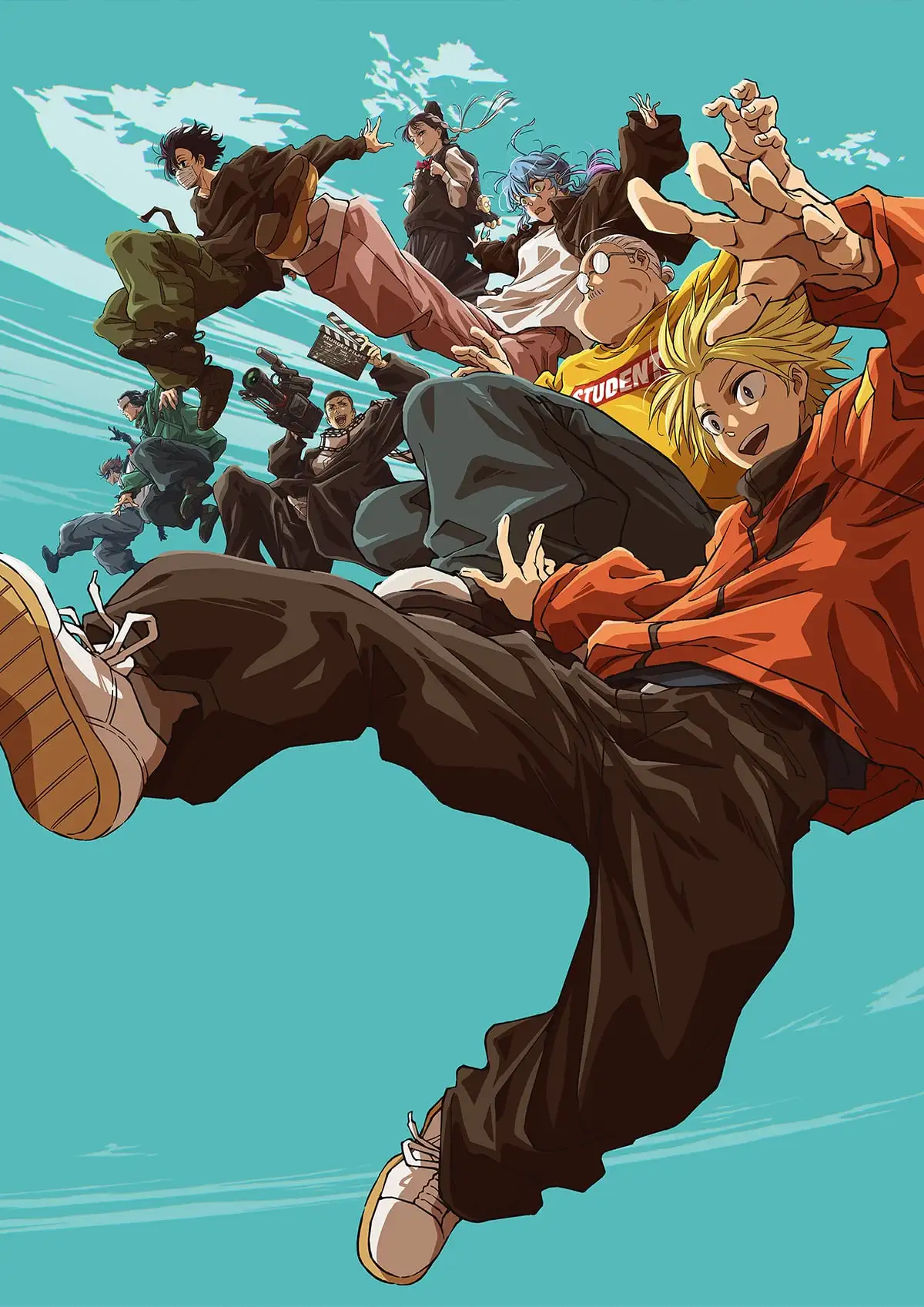
Cited from the official site https://sakamotodays.jp/