

The generation that's been watching Dragon Ball ever since they were little must already be in their forties or older by now. Despite being such an old work, the story connects with a junior coworker ten years younger, with your own kids' generation, and not just that, it even connects with people living in foreign countries. Dragon Ball is content beloved across generations and races alike. And it's a work I'm certain will keep living on in our hearts forever. Inevitably, the moment there's word of a new Dragon Ball, it's destined to draw attention from around the world. What's more, this work is the late Akira Toriyama's final work. When Akira Toriyama passed away, I felt a sense of loss I'd never felt before. I'd had beloved celebrities die before, but it was only ever to the extent of thinking, "that's sad." But this is what it means when the creator of content so rooted in your own life passes away: content that's been by your side since childhood, kept your beloved world going, content you've kept loving into adulthood, and that lets you return to being a child whenever you touch its creative world. It was as if an entire era had closed. I imagine that on that day, people all over the world thought the same thing I did.
That's exactly why my desire to savor DAIMA inevitably becomes so strong.
This Sense of Excitement…!!
The composer handling this work's score hadn't been revealed at this point. After watching up through the latest episode, Episode 2, my first impression was that this exciting score felt nostalgic, reminiscent of Dragon Quest or early Dragon Ball.
The score that had played so far included heartwarming, slightly comedic pieces fitting for everyday life, as well as pieces using the melodic minor scale that conjured the atmosphere of villains scheming in the shadows, just as you'd expect. At the end of Episode 2, in the scene boarding the spaceship, I also caught a vaguely sci-fi piece with reverb-heavy resonance across the whole thing, the kind that makes you feel the vastness of space.
When you think of Dragon Ball, you picture enemies who grow endlessly stronger and a Goku and company who grow even stronger to defeat them. In Z's score, the music by the late Shunsuke Kikuchi, which had a vaguely period-drama feel (Kikuchi also wrote scores for things like Abarenbo Shogun, and Z's score is fairly close in image to those), fit nicely into the speedy battle scenes. But it can't be helped since the eras are different, and this work's pieces have a quite different character, with more direct, expressive pieces and a score that stood out more (though maybe I just remember it because I listened to it for so long). The pieces written by Norihito Sumitomo, who handled the score for the recent Super, might be a bit close in atmosphere to DAIMA's score. The sense of not standing out, in the best way, and functioning as a fine supporting player for the work, also feels like a recent-style score. I'm more and more curious who the composer is.
They said DAIMA would be a work centered on adventure, so as it ramps up from here, I'd bet the pieces used will suit it well: desolate pieces expressing the harsh environment of the Demon Realm, so different from the living world; valiant yet exciting pieces like the ones you hear in Dragon Quest that say "a grand adventure is beginning!"; and slightly lonely pieces evoking a vast world. Along with a story whose direction I can't predict, I have a feeling the score will exceed my expectations too, and I'm really looking forward to seeing where it all goes.
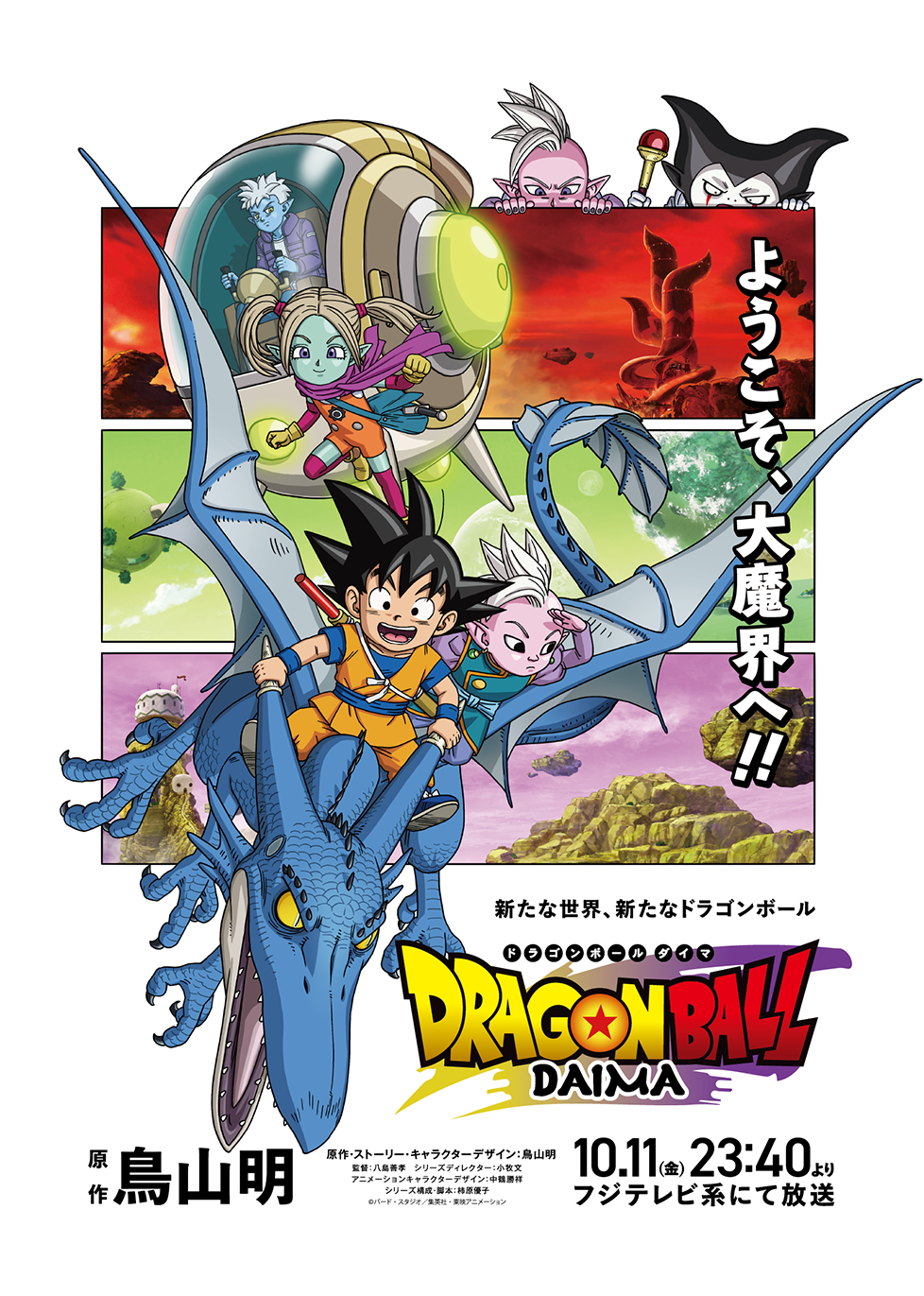
Quoted from the official site https://dragonballdaima.com/index.html