
The first anime soundtrack I ever bought was, I'm pretty sure, "Azumanga Daioh※note 1 Original Soundtrack Vol.1."
Looking back now, it's almost too perfect an album to serve as my "encounter with anime scores"—there's no shortage of things to say about it—but my reason for buying it was the ultra-simple "it's merch related to a show I love!"
This soundtrack was released in 2002. The world wasn't flooded with anime goods the way it is now—there were no acrylic stands, no plushies※note 2, and no e-commerce sites for buying merch.
As an otaku elementary-and-middle schooler living in Saitama Prefecture, even after falling for "Azumanga Daioh," the only goods I could get my hands on within my daily life were things like pencil boards, calendars, capsule toys, and prize items...
The legendary "Let's wash our hands!" poster※note 3—even posted at my own school—who and how was I supposed to contact to get one for myself personally...? I was so starved for show merch that I thought about little else every single day.
Among the related products available to me at the time, after the theme-song and character-song CDs, this soundtrack was the next thing I reached for.
※note 1: "Azumanga Daioh" is a four-panel manga by Kiyohiko Azuma, the artist behind works like "Yotsuba&!" It's a slice-of-life comedy depicting the high school life of a quirky cast of characters, centered on Chiyo Mihama, a genius girl who skipped grades to transfer into high school at just 10 years old. The original manga was serialized around the turn of the millennium and was also adapted into anime.
※note 2: Plush toys.
※note 3: A handwashing-promotion poster by Saitama Prefecture featuring the characters of "Azumanga Daioh." Back when collaborations between government offices and anime/manga weren't nearly as common as they are now, it suddenly appeared at schools and other places around Saitama, startling fans of the show.
I got this soundtrack from somewhat impure motives, but fortunately, it became my formative experience of touching the fun and depth of anime "scores."
The score for this show was handled by the "Kuricorder Pops Orchestra."
It's a music unit centered on the members of the Kuricorder Quartet—the people who created "that theme" that plays in your head the instant you hear "PythagoraSwitch."
But at the time, completely unaware that these were such amazing people, I just remember being floored, thinking, "You can make music like this with a recorder (which I was actively playing myself at that age)?! That's insanely cool!"
And on top of that, the music and tone fit "Azumanga Daioh" perfectly...!
As music to play when that distinctive four-panel atmosphere got animated, it matched the show's worldview so well that nothing else was even imaginable.
And as I listened to this soundtrack over and over, I realized something anew at the time.
That anime scores are frequently used in non-anime programs too—evening news, variety shows, and the like.
The "Azumanga Daioh" score in particular gets used in such programs especially often, and I suspect a great many people recognize the music even if they've never watched the anime.
(Do try sampling the music from the link at the top—you're bound to find a track you know.)
From then on, once I was paying attention, I increasingly noticed that—beyond this show's soundtrack—anime scores are used in a surprising variety of programs.
Even within the audio of the same anime, scores seem to get less exposure than theme songs or voice actors' voices, yet they turn out to be far more familiar, ubiquitous music in our surroundings than you'd think.
Still, for people not very familiar with them, the hurdle of actually "buying and listening to" a score may feel high compared to theme songs and the like.
For such people, what I'd recommend is first getting into scores as background music for work.
Anime scores, which are largely instrumental, don't disrupt your concentration while you study or work, and a track that plays in a favorite scene can give your motivation a boost.
Of course, I can't help thinking that with musical knowledge you could analyze the tracks more deeply—the instruments used, the genre, the chord progressions and rhythms—and enjoy them even more.
But even someone like me with zero musical knowledge finds that just listening calls beloved scenes to mind, getting me fired up or excited—that's the deep generosity of anime scores.
Something I realized after experiencing all kinds of works: scores can become astonishingly etched into your memory before you know it, even when you weren't watching the show thinking, "I'm going to listen closely!"
That tendency is especially strong for works you loved and rewatched over and over. When I'd later listen via the soundtrack, the scene where a track plays would naturally float to mind, and I'd be surprised—"When did I get so familiar with this?"
In that way, a score isn't the kind of presence that stands out over other elements—the visuals, the voice actors' performances—when you watch a work, nor the kind that's all you remember.
And yet, without it, that scene wouldn't hold together—it's a presence like the light or oxygen that makes up this world, or so I personally believe.
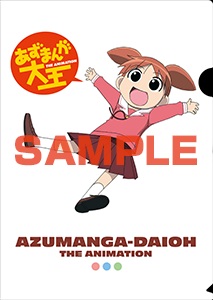
Image from the official site: https://king-cr.jp/special/azuma/