
The film "The Birth of Kitaro: The Mystery of GeGeGe" has finally started streaming. Since the TV series followed Dragon Ball Super in its slot, the 6th series gave a rather subdued impression, but I never imagined it would transform so dramatically with a movie.
Yokai booms have come around several times, apparently dating back as far as the Edo period. The yokai paintings drawn by Edo-period painter Sekien Toriyama became a huge sensation, and Shigeru Mizuki himself used Sekien's drawings as-is without adding any of his own arrangement. The Ubume that appears on the cover art of yokai critic and novelist Natsuhiko Kyogoku's books is one of Sekien's drawings.
After that, GeGeGe no Kitaro was made into an anime and a huge boom arrived. After the 2nd series ended, GeGeGe no Kitaro was broadcast as a new series roughly every ten years. During the 5th series' run, the rental-book-era "Hakaba Kitaro" (Kitaro of the Graveyard) was even broadcast in a late-night anime slot.
Now, this work is a completely original story depicting the lead-up to "the birth of Kitaro" as portrayed in Hakaba Kitaro. The feel of it is like "The Inugami Family," with Kitaro's father (referred to in the film as "Gegero") and "Mizuki," a blood bank worker who somehow survived the Pacific War, teaming up to solve a bizarre incident surrounding a Showa-era inheritance dispute.
The Mizuki in the story and the author Mizuki are entirely different people, but there are several scenes showing the war as a trauma, such as both going to the same place (the South Pacific) during the Pacific War and being ordered by a superior to die honorably in battle.
It's reputed to be a real tearjerker, and word of the film spread through reviews. When I saw it, it came with a so-called "Happy Kitaro sticker" of Kitaro laughing while being held by Mizuki, his mother, and his father, who hadn't yet become just an eyeball. Seeing this after the film is over is incredibly moving all over again. Even while thinking such a future could never come to be, a longing wells up that you wished it could have been this way.
Incidentally, this Mizuki character also makes a guest appearance in the Netflix version of Akuma-kun, and though it's just a few words, he says something that strongly evokes his feelings toward Kitaro.
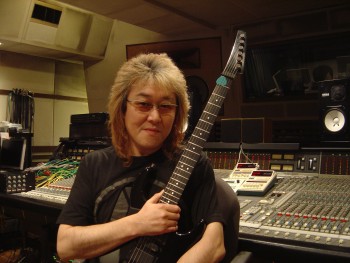
Now, the composer for this work is Keiji Kawai. I've introduced him in the composer corner as well, so I don't think I need to introduce him again, but this time he's continuing his role as composer from the 5th series.
First, Track 1, "GeGeGe no Kitaro - Warning -." This is the scene where he says, "From here on, I can't guarantee your life no matter what happens. I did warn you." It uses an arrangement of a piece by Taku Izumi, and perhaps because it's early on, it's somewhat subdued.
And the biggest highlight of this O.S.T. is surely "Yatto Aeta" (At Last We Meet). Gegero came to a remote, out-of-the-way countryside in search of his wife. Gegero himself didn't much like humans, but thanks to his wife loving humans, his dislike of them gradually healed. This is the worst conceivable reunion with that wife. Yet even within it there is joy, and anger, and it's a piece packed with all sorts of emotions like these.
GeGeGe no Kitaro started streaming on Amazon Prime and Netflix right after its theatrical run ended. It's a work I highly recommend, so please do watch it. Lastly, let's part ways after watching the teaser PV for The Birth of Kitaro: The Mystery of GeGeGe.