

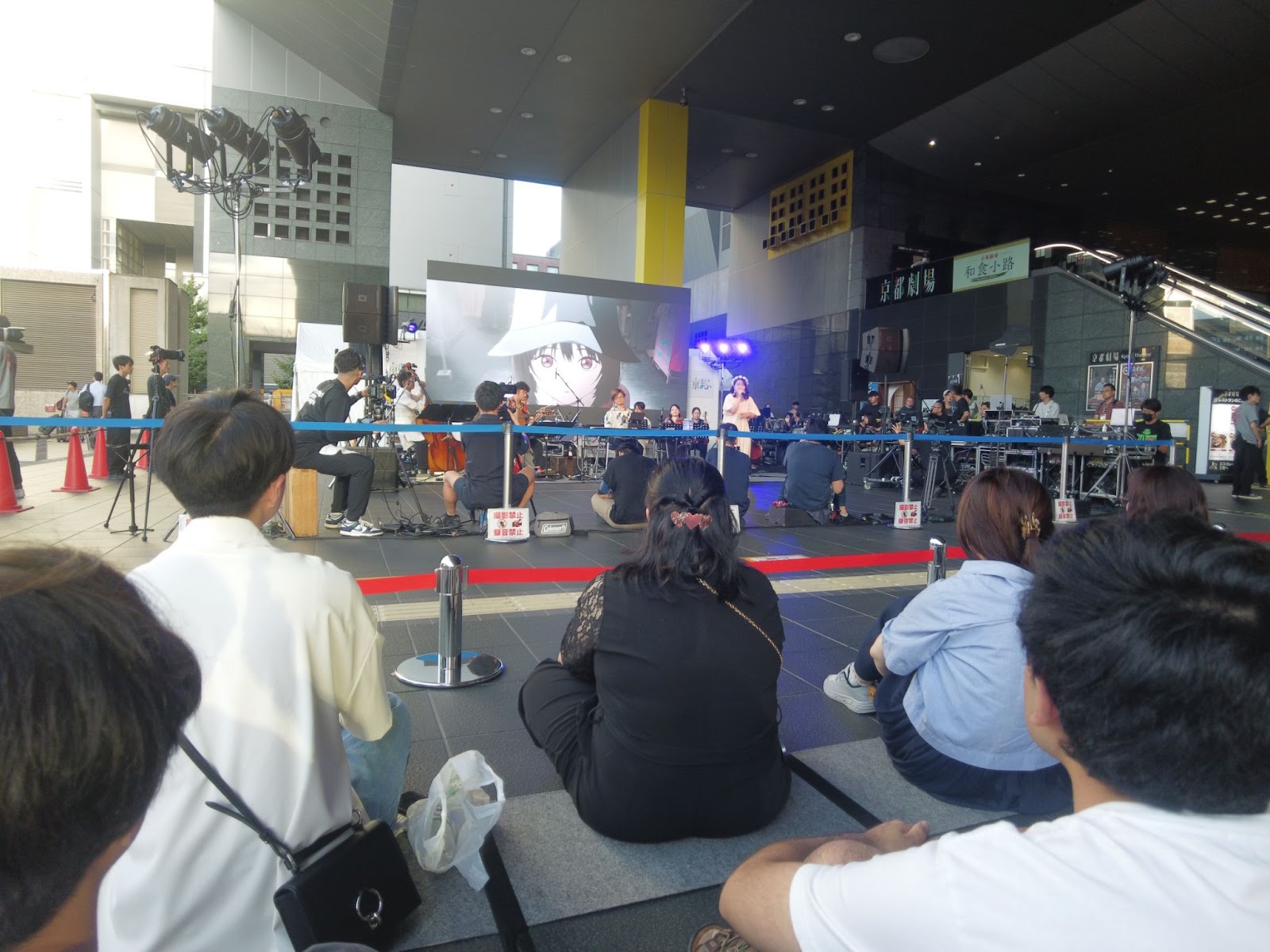
The Shoshimin Series score, mid-performance. The audience already has season two in their sights.
Last time, I wrote up to the point where Obata, leading his band, performed the Shoshimin Series score through to the second-to-last track. But the pre-festival event wasn't just about the performances. In fact, between songs, his thoughts on the music and the other staff who make anime were also introduced, so let me supplement those parts while also reporting on the excitement of the final track.
Midway through this pre-festival live, Shuichiro Umeda, who plays Shoshimin Series protagonist Jogoro Kobato, and director Mamoru Kanbe came up on stage again.
Unlike Umeda, who'd appeared earlier, the director had a very nervous look about him. The director, who normally communicates through anime rather than the performance of speaking in front of people, what would he say? I was really looking forward to it.
The Shoshimin Series score that left the strongest impression on the director was, of course, the "main theme." The way Japanese anime is made differs from overseas: rather than composing a score completely fitted to the footage, the more common style is to convey the impression of the work (or its source material) first and have several score pieces written, which the director then selects from. Sometimes the director takes a liking to a score piece and conversely builds the footage to fit it.
Not only that, sometimes the music and footage just happen to line up on their own without anyone intending it. Incidentally, the reason for that is because the director and Obata are a golden combo! Opinions like that flew around. The world of film scoring runs deep! The director, who'd looked nervous at first, gradually relaxed as he talked with Obata, and I felt that through the work of anime and its score, the two of them share a real bond.
Now, when Obata composes a score, he apparently starts by talking things through thoroughly with the director.
The setting and its mood. How the anime's story and scenery intertwine, what a character's emotions are like in this moment, and so on. On top of that, there are even specific requests like "I want an edgy element" in the score. In the case of this Shoshimin Series, I suppose "Crying Over Tanmen" would count as a pretty edgy score piece.
After they'd finished talking through the Shoshimin Series score, the next to take the stage were Watanabe and Omichi, professionals who create anime sound effects. The two of them hold a profession called "Foley artist." Even among anime lovers, I doubt many have heard of the Foley profession. It's a job that's truly the unsung hero behind the scenes.
A Foley artist's job is the acting sounds, like footsteps and the rustle of clothing; in other words, the role of being the "voice actor from the neck down," so to speak. The Foley artist is the one who puts the finishing touches on the acting, breathing in the effects. At this Kyoban Festival, they recreated Osanai's footsteps from episode 1 and the sound of a bicycle's spokes turning as it's pushed along, and when these come in, the sense of "the anime is complete!" is incredible. And once again I was moved to realize that, though we just say "anime," it isn't only the artists who draw and the voice actors; a wide variety of people are involved in making it.
And so, we finally arrive at Obata's last live track. The finale is the version of the main theme with vocals!
This track, listened to normally, is a lovely, easy-on-the-ears piece of music, but there are parts where he deliberately makes a measure one short. In other words, a section that should have 8 measures has 7, and so on. Yet it isn't quite an odd time signature either; you can tell it's music that stands on an exquisite balance. These slightly strange measure sections apparently represent the two who keep saying "I want to be an ordinary citizen!" yet can't manage to actually become one.
Now, the difference from the earlier main theme is that "it has vocals." The main theme sung by Yurica Republic is truly a song that symbolizes the Shoshimin Series, and it's fascinating how completely different it sounds once that exotic voice, carrying a somehow folk/ethnic flavor, comes in.
When the power of the work and the power of the music combine, it makes you want to go to Gifu, the sacred ground of the Shoshimin Series. You start thinking, isn't Gifu actually a really appealing city...? The gorgeous anime visuals, and the splendor of the main theme. Especially for someone like me who's never been, there couldn't be better promotion for improving Gifu's image.
As music, what feels great is, of course, the guitar arpeggio before the chorus. It's in parts like these that you feel Obata's extraordinary ability to elevate things into "pop," and to deliver it as a sound that's easy for the vast majority of people to listen to.
What I felt further with this final track was that, unlike a typical J-pop song, the vocals weren't "the star of the show." That was true of the volume, and of the presentation too. This, surely, is the charm unique to film scoring. The vocals are just one of the sounds, and only when everything combines does it become a single work called a film score.
Now, next time, the organizer of Kyoban Festival, "Yuki Hayashi," finally appears!
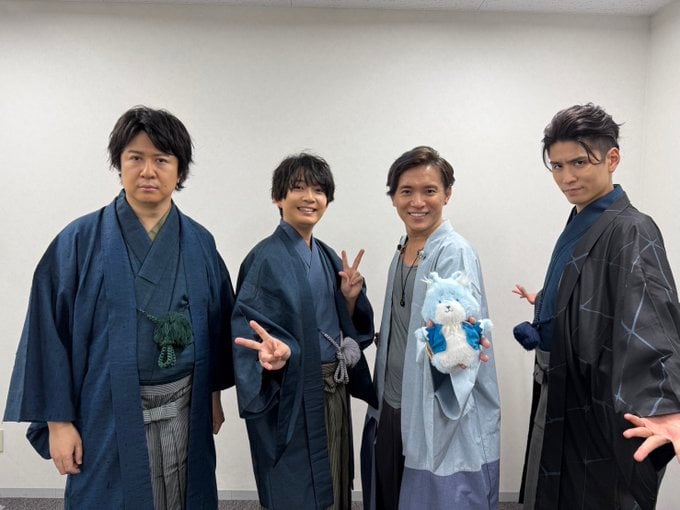
![[Grand Finale] Japan's World-Class "Film Score" Festival! Report From the Day Kyoto Was the Hottest Place in Japan: ~The End of the Festival~](https://lh7-rt.googleusercontent.com/docsz/AD_4nXeQ3v4vT4vYZ3gqjtqxpOCznnXOIbHJG7LtyMoObLex0PdioDc4tXkl61hhVOeG57eg3-4OkIcO66j6rBNkQiaAIkHGf-oKFHWXrbCaLDQnfnFOx8kxP2YNCa4vORqeJgRCfdK9kacPXqc_tyOYPCQpeyzg?key=9TEImc1vGP6ZD2O_F6ImQg)
![[Penultimate Act] Japan's World-Class "Film Score" Festival! Report From the Day Kyoto Was the Hottest Place in Japan: The Kyoban Festival Main Event, Part 4](/assets/img/2024/09/dji_mimo_20240922_193940_906_1727068533682_photo-1024x768.jpeg)