

A greeting from Obata, the composer behind the Shoshimin Series score.
The Shoshimin Series. It's a work by Naoki Prize-winning author Honobu Yonezawa, familiar to many from titles like Hyouka, and it was a 2024 summer anime that earned high praise.
Its sacred ground isn't all that far from Kyoto (though saying that, a guy from Hokkaido might give people the impression his sense of distance is totally broken...): it's Gifu City, Gifu Prefecture. Originally a coming-of-age mystery novel series, it's a four-part work. It's still fresh in memory how it collaborated with JR and drew so many fans on pilgrimages to its sacred sites. It's a work that already has me looking forward to season two!
As for the plot: the two protagonists, Jogoro Kobato and Yuki Osanai, form a mutually beneficial relationship of helping each other out, following the guideline that "as ordinary citizens, we should never stick our necks out, live each day in peace, and firmly take a stance of avoiding anything that would disturb that"; together they aim to become true "shoshimin" (ordinary, unremarkable citizens). Yet contrary to the direction they're aiming for, they keep getting dragged into a series of incidents. It's an utterly fascinating anime that catches the eye with its gorgeous artwork, its story that moves at a brisk, snappy pace, and its interesting framing and composition. At this pre-festival event, impressive scenes from episode 1 played a few times, and I totally get the urge to go on a pilgrimage. The realism of the background detail and depiction is such that, wandering the sacred grounds, you half-feel you might suddenly run into the two of them walking home from school.
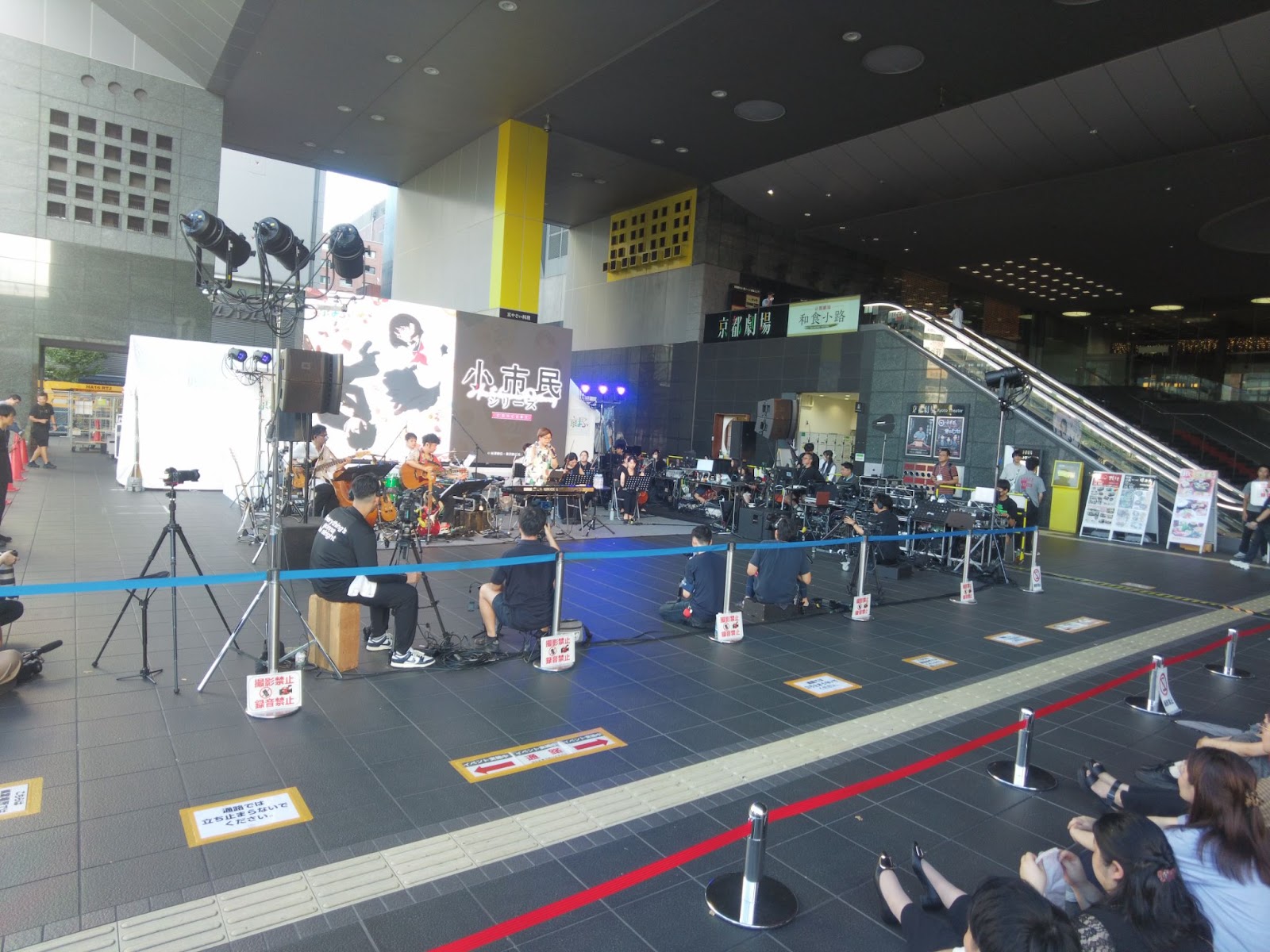
And now, the performance of the score for the masterpiece "Shoshimin Series" finally begins. Here are my thoughts on each track and more.
Before I knew it, the venue was packed to the brim. The audience was refined, taking their seats without making a sound. First an anime PV played, and the moment the performers came out, the energy shot up whether you liked it or not. Among film score fans, of course, but even the main theme video posted on the official TV Asahi YouTube channel is flooded with rave comments. Naturally so, since a bona fide masterpiece is about to be performed.
The Shoshimin Series score uses a remarkable number of instruments, and for this pre-festival event the lineup was a band of drums, bass, guitar, flute, and a four-piece string section. Musically, you could say the defining trait is a sound that carries a touch of nostalgia throughout.
The first track was a killer tune right out of the gate. It's the instrumental version of the main theme that played in episode 1 of season 1, with its comforting fusion of a somehow Japanese melody and timbres reminiscent of medieval Celtic music.
And its fusion with the footage behind it was beyond what the word "masterful" can capture. I lost count of how many times I got goosebumps. The acoustic guitar riff feels good the whole way through. And the part where the other instruments drop into a break (every instrument at rest) leaving just the acoustic guitar riff, with that thrilling anticipation of the next swell, is the absolute best. The way the footage and the musical hits line up perfectly is just too satisfying! So this was the right way to listen to a film score...
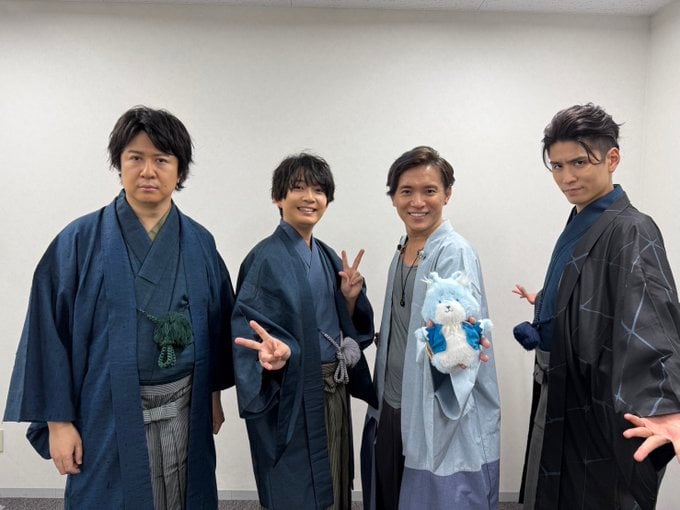
When the main theme ended, thunderous applause. Then a greeting from composer Takahiro Obata. Next, after a greeting from the program's producer, voice actor Shuichiro Umeda, who plays protagonist Jogoro Kobato, came up on stage to say hello.
Voice actors really do have incredible speaking voices in real life too, huh. The fans in the venue seemed to be getting fired up by that calm, beautiful voice.
The next track was "Investigation." It's the song that plays in the anime when they're searching for clues and such. That feeling of confronting the mysterious, of being squarely in the middle of an investigation, comes through in the tremolos of the violin and viola.
And then, after a melody that feels like the case has gone cold, you push through the ominous music and arrive right back at the opening. Since this track plays during Kobato's detective work each episode, it might be the one you're most accustomed to hearing in the anime.
The next track: the theme song for the cute Osanai, the heroine who tends to hide behind the protagonist and who loves sweets.
An adorable atmosphere wafts up from the timbres. The sounds of bells and xylophone feel pleasant.
Within the short track, I also felt an atmosphere that hints at her quietly strong core.
Next was "Revenge."
A dynamic piece in which, from the opening, a violin plays a melody at full volume over an acoustic guitar arpeggio. How should I even describe this feeling?
It's a sound like a flashback, like the moment the story begins moving toward its convergence...
The next track flowed straight in from the previous one, so I didn't catch its title. It's a tranquil tune; footage played of the two protagonists going about their everyday lives, a heartwarming song with flute in the lead role. The melody unique to electric piano also feels great.
Next was another track that begins with a guitar arpeggio. Once the flute comes in, a lovely melody suddenly conjures a pleasantly rural scene in your head; is this a morning song? A melody that feels still a little drowsy, yet with the refreshing light of the morning sun spilling through the curtains. It expresses a morning gradually coming to life through sounds that gradually layer up. Maybe it's the anime footage playing, but it makes me want to drink milk. A song that makes you think, "Yeah, my parents' home felt just like this."
An enka tune called "Crying Over Tanmen" that appears in episode 7! It's an in-show song born from the director's unreasonable demand to "play a sound with knockout impact."
How to put it, it's a track that packs in all the enka clichés, and the level of completion is such that even someone who hasn't watched would probably feel "Wait? Have I heard this song before?" Obata said it was the first enka he'd ever written, which is astonishing.
The next track: a relaxed, bossa nova-style accompaniment that fits footage of Osanai gazing into a cake shop's display window. It has the air of relaxation time at a cafe; a track that makes you crave coffee and Western pastries.
Once again, I felt that the Shoshimin Series has a lot of stylish tracks. The next one is also a jazzy number that, again, would suit a classical cafe or restaurant. Precisely because it's an anime with so many conversation scenes, tracks like this that you could hear in everyday life without any sense of intrusion, blending in (in the best sense), must be a perfect fit.
Obata said he was originally a jazz pianist, and sure enough, the sight of him playing jazz piano was thoroughly assured.
Next was a track with an atmosphere of the story springing into motion. A sense of crisis comes through in the strings' staccato. The band comes in all at once and the tension ratchets up further; the final note isn't the tonic. Will it resolve? That "what happens next?!" feeling lasts to the very end.

At the end, all the performers gathered together.
When composing, you make the music to fit the footage; but here at this film score festival, it's the reverse, making footage to fit the music. I really hope this catches on. You get to hear film scores with incredible immersion...! It got me even more excited for the main Kyoban Festival day! And on that note, to be continued.
![[Grand Finale] Japan's World-Class "Film Score" Festival! Report From the Day Kyoto Was the Hottest Place in Japan: ~The End of the Festival~](https://lh7-rt.googleusercontent.com/docsz/AD_4nXeQ3v4vT4vYZ3gqjtqxpOCznnXOIbHJG7LtyMoObLex0PdioDc4tXkl61hhVOeG57eg3-4OkIcO66j6rBNkQiaAIkHGf-oKFHWXrbCaLDQnfnFOx8kxP2YNCa4vORqeJgRCfdK9kacPXqc_tyOYPCQpeyzg?key=9TEImc1vGP6ZD2O_F6ImQg)
![[Penultimate Act] Japan's World-Class "Film Score" Festival! Report From the Day Kyoto Was the Hottest Place in Japan: The Kyoban Festival Main Event, Part 4](/assets/img/2024/09/dji_mimo_20240922_193940_906_1727068533682_photo-1024x768.jpeg)