

Look Back, ever since I read it on Jump+, I remember how incredibly shocking it was. It was a fairly long one-shot for its kind, yet the moment I finished, I went right back and reread it from the very beginning. And that's despite having read it carefully the first time through. Even when I saw it in theaters, I honestly wanted to stay in my seat and watch it a second time. On streaming, I did exactly that right away. With streaming, you can watch it as many times as you like and no one gets mad. And I cried over and over at how wonderful its score is.
So, if you don't mind, after reading this rambling piece of mine, I really want you to watch Look Back one more time.
First off, the opening is already wonderful. From the historical setting, you can tell it's set a little in the past, from the nostalgic feel of a homepage screen reached over the internet. But before that, in the scene where the camera zooms in on the protagonist silently drawing, from the night-time town (the very opening), the score begins with numerous reverse sounds. As you can tell from the title "Look Back," this is a story of remembering the past, and that's surely what the reverse sounds express. These reverse sounds play many times throughout the work. While remembering the dense parts of one's life that could be called the landscape of the heart, the reverse sounds blend pleasantly into the beautiful melodies.
The opening piece, too, after countless reverse sounds, flows into an orchestra centered on the beautiful sound of piano. Perfect. The technique of using reverse sounds for a return to the past probably isn't all that rare. But even so, to put them into every single piece (the theme song included) to this extent, and to make you feel that every one of them was perfect, with the score and the theme song connected, everything built like one continuous work—at least for me, hearing a score like that was a first. Every reverse sound feels like a setup, like foreshadowing… in any case, if he composed the music in tandem with its connection to the story, I'm truly floored by his genius.
Next is the scene of facing what is probably the first setback of one's life, and still looking ahead, breaking into a run, and practicing drawing over and over and over. The beautiful sound of strings comes in quietly, the sound gradually growing stronger and bigger, the rising phrase that sticks in your ears, and then, along with the roll of a snare drum, a melody that fills you with courage. The seasons and scenery flow by one after another, the sketchbooks and how-to books piling up. Effort with no visible end in sight is truly a frightening thing. Your only compass is within yourself, and the more effort you make, the more you're made to realize there's always someone above you. This is because your own level has risen and you've come to know how vast the world is, so you can see your own position—in terms of the Dunning-Kruger effect, it's proof you've started climbing the slope of enlightenment. But unfortunately, you can't recognize your own leveling up; if anything, you're in a state of thinking only the people around you are amazing, which makes it absurdly painful too. Breaking out of the shell of a level where you're only praised within your own circle is unavoidable here, but especially at the beginning of climbing this slope, not only do people not praise you, but as in Look Back itself, others come and offer their opinions. "You can still turn back now," "You should fall in line with everyone else," and so on. Your only fuel is your own motivation, and yet the people around you try to drain it. This is an aside, but when you try to walk a different path from others, people who've only climbed the "Mount Stupid" of the Dunning-Kruger effect often come along to lecture you and try to assert dominance.
That first setback every creator has had to pass through, and the start of a true challenge. The sense of progress you genuinely feel within yourself is packed into the score that plays here. It's nothing short of wonderful, and it's music that makes you want to say, thank you for reminding me of how I felt back then.
Look Back still has a long way to go. To be this moved by my heartstrings in the early part—can it really hold up to the end…?!
And so, to be continued in the latter half…
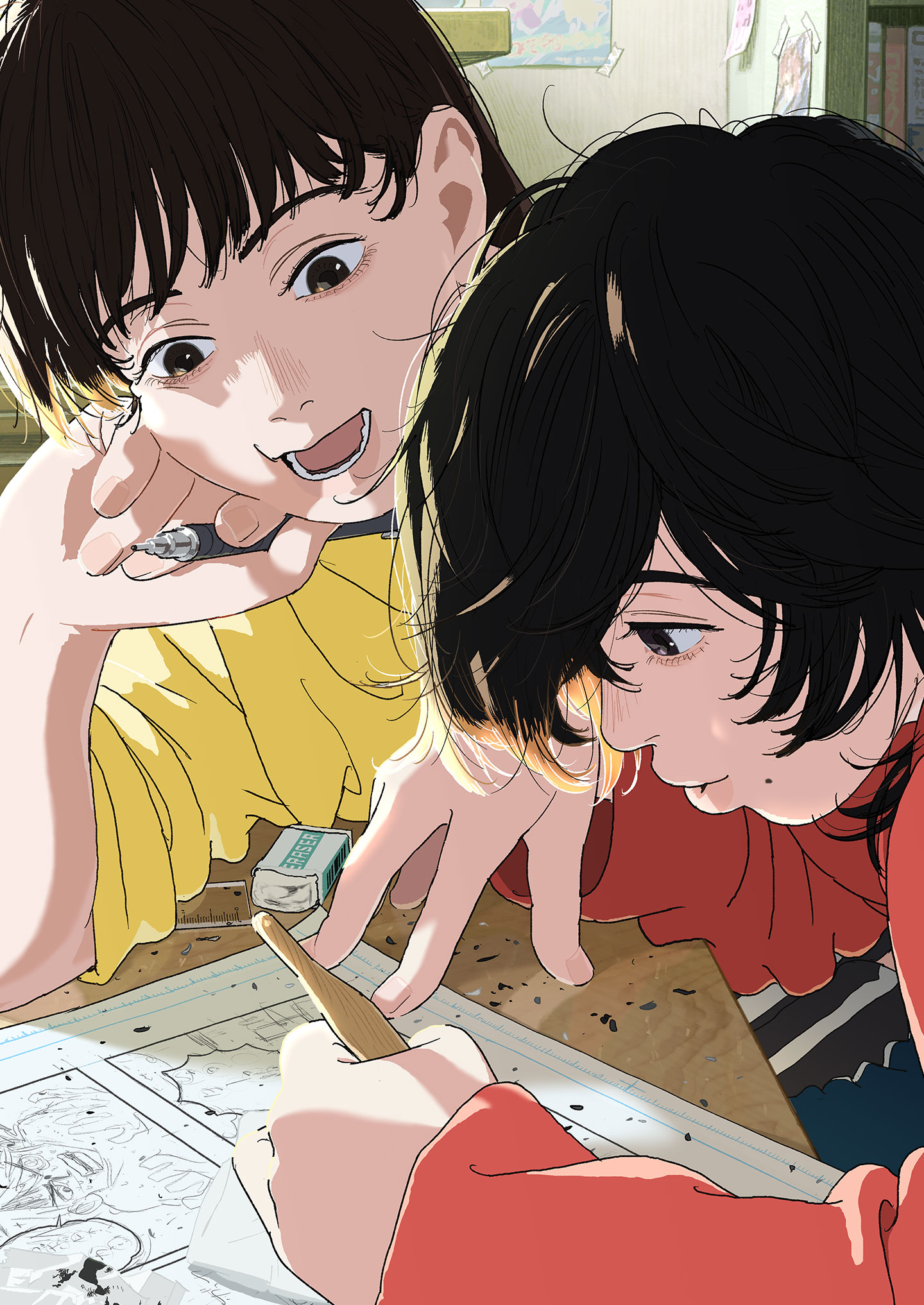
Quoted from the official site https://lookback-anime.com/